Choosing the right raised floor system is one of the most consequential decisions a project owner, engineer, or contractor can make for any modern building. Get it wrong, and the consequences ripple across decades: compromised cable management, inefficient cooling, dangerous structural instability, and costly, disruptive replacements. Get it right, and the raised floor becomes an invisible asset—a foundation that enables flexibility, protects technology investments, and delivers operational efficiency for 25 years or more.
Every year, projects across Saudi Arabia and the GCC face avoidable failures because the raised flooring system was selected based on price alone, without understanding load requirements, environmental conditions, or long-term scalability. A data center that cannot support heavier servers. An office that cannot be reconfigured without tearing up the floor. A control room where maintenance requires hours of downtime. These are not inevitable outcomes. They are the results of a flawed selection process.
This guide provides a comprehensive framework for choosing the right raised floor system — covering design principles, load capacity calculations, specification evaluation, panel types, application requirements, and common mistakes to avoid. Whether you are planning a hyperscale data center, a corporate headquarters, a government facility, or a telecom hub, this guide will help you make informed decisions that balance performance, cost, and long-term value.
What Is a Raised Flooring System?
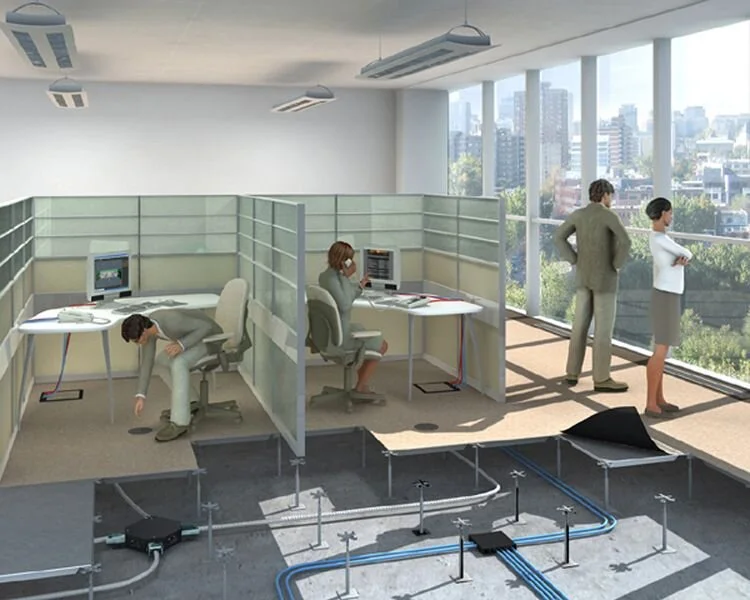
A raised flooring system, also known as an access floor, is a modular, elevated structural platform installed above a building’s concrete slab. It creates an accessible void space—called a plenum—used to route electrical cabling, data networks, HVAC ducts, plumbing, and other building services.
Main Components
Raised floor panels: The walkable surface tiles, typically 600mm x 600mm, manufactured with various core materials (calcium sulphate, cementitious, steel, or particleboard) and finished with HPL, vinyl, carpet, or anti-static coatings.
Raised floor pedestals: Adjustable steel supports that elevate the panels. Pedestals anchor to the subfloor, provide height adjustment for leveling, and transfer loads to the structural slab.
Raised floor stringers: Horizontal braces that connect pedestal heads, adding lateral stability and increasing overall system rigidity. Stringers are essential in seismic zones or applications with heavy rolling loads.
Accessories: Include edge trim for perimeter finishes, air sealing gaskets to prevent leakage in UFAD systems, conductive components for anti-static installations, and cable management accessories.
How Raised Floors Work
Panels rest on pedestal heads, creating a continuous walking surface. The void beneath houses services. Any panel can be lifted using a simple suction tool, providing immediate access to the underfloor infrastructure. This modular design enables reconfiguration, maintenance, and expansion without destructive work.
Common Industries and Applications
-
Data centers: Cable management and precision cooling via Underfloor Air Distribution (UFAD)
-
Server rooms: Organized infrastructure for IT equipment
-
Corporate offices: Flexible layouts and technology integration
-
Control rooms: Zero-downtime access for mission-critical operations
-
Government buildings: Secure, compliant, and adaptable infrastructure
-
Telecom facilities: Dense cabling and equipment support
-
Healthcare: Clean, accessible pathways for medical systems
Why Choosing the Right Raised Floor System Matters
Choosing the right raised floor system is not a technical detail—it is a strategic decision with long-term operational and financial implications.
Long-Term Operational Efficiency
A correctly specified raised floor system enables efficient cable management, optimal airflow for cooling, and easy access for maintenance. An incorrect system creates congestion, restricts air movement, and turns every repair into a major disruption. In data centers, this directly impacts Power Usage Effectiveness (PUE) and energy costs.
Safety and Durability
Panels with insufficient load capacity deflect under weight, creating tripping hazards and damaging cables. Poor-quality cores degrade over time, absorbing moisture or losing dimensional stability. Fire-resistant materials prevent flame spread. Anti-static surfaces protect sensitive electronics. Choosing correctly means choosing safety.
Infrastructure Flexibility
Modern buildings are not static. Departments reorganize. Technology evolves. Work patterns change. A correctly specified raised floor system accommodates these changes without construction. Panels lift. Cables reroute. Services adapt. An incorrect system locks you into a fixed configuration.
Maintenance and Scalability
Accessibility is the core advantage of raised floors. But not all systems are equally accessible. Poor panel fit, inadequate pedestal adjustment, or missing accessories compromise usability. Correct specification ensures that every panel is truly removable and that underfloor space is organized for future growth.
Total Lifecycle Cost
The cheapest system almost always costs more over time. Lower initial price often means lower load capacity, inferior materials, or weaker support structures. Premature failure requires replacement. Replacement demands downtime. Downtime destroys revenue. Choosing the right raised floor system means evaluating total cost of ownership—not just purchase price.
Understanding Raised Floor Design
Raised floor design is the foundation of system performance. Poor design compromises every other aspect of the system, regardless of component quality.
Structural Layout
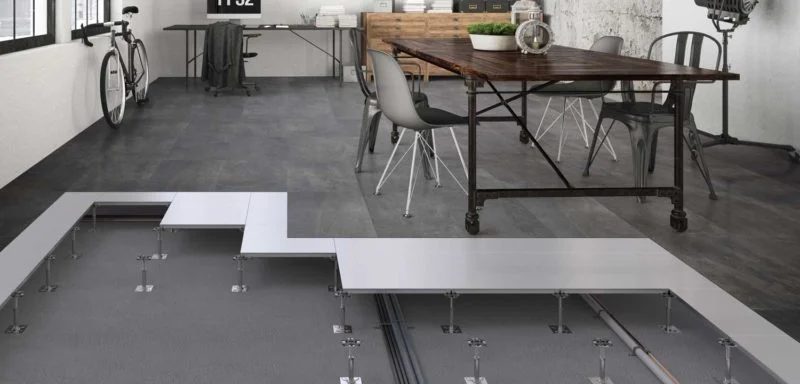
The grid system—pedestal spacing and stringer configuration—determines load distribution and stability. Standard spacing is 600mm x 600mm, matching panel dimensions. Wider spacing reduces material costs but may not provide adequate support for heavy loads. Stringers add lateral stability and should be specified for seismic zones, high-traffic areas, or applications with rolling equipment.
Panel Types
Panel selection is the most visible design decision. Core material determines load capacity, fire resistance, and acoustic performance. Surface finish determines aesthetics, cleanability, and anti-static properties. Perforated panels enable UFAD cooling. Solid panels provide maximum structural integrity.
Pedestal Systems
Pedestal height determines plenum depth. Shallow plenums (150-300mm) suffice for basic cable management. Deeper plenums (600-1200mm) accommodate high-volume airflow and dense cabling in data centers. Pedestal load ratings must match or exceed panel ratings. Conductive pedestals are required for anti-static installations.
Airflow Planning
In UFAD systems, the plenum is a pressurized air supply chamber. Design must ensure unobstructed airflow pathways. Cable trays should not block air distribution. Perforated panel placement must align with cooling zones (cold aisles in data centers). Air sealing gaskets prevent leakage at panel edges and perimeter.
Cable Routing Considerations
Underfloor cable management should separate power and data lines to prevent electromagnetic interference. Cable trays provide organized pathways. Service loops allow for future reconfiguration. Planning cable routes before installation prevents congestion and preserves accessibility.
Understanding Load Capacity Requirements
Load capacity is the single most critical technical specification for any raised flooring system. Exceed it, and panels deflect, crack, or fail entirely.
Types of Loads
Static Load: The weight of permanent equipment and furniture placed on the floor. Server racks, cabinets, and heavy desks contribute to static load.
Dynamic Load: Moving loads such as people walking, carts rolling, or maintenance equipment being moved. Dynamic loads create stress beyond static weight.
Concentrated Load: Weight applied to a small area, typically defined as a 25mm x 25mm square. Server rack legs and equipment feet create concentrated loads. This is the most critical rating for data centers.
Rolling Load: Simulates wheeled equipment—pallet jacks, carts, or rolling ladders—moving across the floor. Rolling load ratings ensure durability under repeated traffic.
Ultimate Load: The maximum load a panel can withstand before structural failure. Safety margins are built into working load ratings.
Load Requirements by Environment
| Application | Typical Concentrated Load | Typical UDL (Uniform Load) |
|---|---|---|
| Data centers (high density) | 15 – 20 kN | 2,000 – 3,000 kg/m² |
| Data centers (standard) | 12.5 – 15 kN | 1,500 – 2,000 kg/m² |
| Server rooms | 10 – 12.5 kN | 1,200 – 1,500 kg/m² |
| Control rooms | 8 – 12 kN | 1,000 – 1,500 kg/m² |
| Corporate offices | 6 – 10 kN | 800 – 1,200 kg/m² |
| Telecom facilities | 12 – 15 kN | 1,500 – 2,000 kg/m² |
| Industrial environments | 20+ kN | 3,000+ kg/m² |
Common Mistakes in Load Specification
Underestimating future needs: Today’s 10 kN load may become tomorrow’s 15 kN requirement as equipment density increases. Specify for future growth.
Ignoring rolling loads: Even if static loads are moderate, rolling carts or maintenance equipment can damage panels not rated for repetitive wheel traffic.
Assuming all panels have same rating: Perforated panels typically have lower load capacity than solid panels of the same core type. Verify ratings for every panel type in your specification.
Forgetting safety margins: Industry practice recommends a 25-50% safety margin above calculated maximum loads.
How to Read and Evaluate Raised Floor Specifications
Raised floor specification documents contain the technical details that determine system performance. Learning to read them is essential for choosing the right raised floor system.
Material Specifications
Panel core: Specifies the core material—calcium sulphate, cementitious, steel, or particleboard. Each has distinct load capacity, fire resistance, and environmental performance.
Steel encapsulation: Specifies steel gauge (thickness) and whether encapsulation is full (top, bottom, and edges) or partial. Full encapsulation provides better moisture resistance and durability.
Surface finish: Specifies finish type (HPL, vinyl, carpet, anti-static) and thickness. Thicker finishes resist wear longer.
Panel Thickness
Standard panel thickness is 28-35mm. Thicker panels generally offer higher load capacity but add weight. Thinner panels may suffice for light commercial applications.
Core Materials Comparison
| Core Type | Load Capacity | Fire Resistance | Moisture Resistance | Acoustic Performance | Cost |
|---|---|---|---|---|---|
| Calcium Sulphate | Very High | Excellent (non-combustible) | Good | Excellent | High |
| Cementitious (Steel) | Highest | Excellent (non-combustible) | Excellent | Poor | High |
| Particleboard (Encapsulated) | Moderate | Low (combustible) | Low | Good | Low |
Fire Resistance
Specifications should include fire resistance rating expressed in minutes (e.g., 30, 60, 90 minutes). Non-combustible cores (calcium sulphate, cementitious) achieve highest ratings. Combustible cores (particleboard) are not acceptable for many commercial and technical applications.
Anti-Static Properties
Anti-static raised floors are specified by surface resistance:
-
Conductive: 10⁴ – 10⁶ ohms (highest protection)
-
Static Dissipative: 10⁶ – 10⁹ ohms (standard for data centers)
-
Generic: >10⁹ ohms (not suitable for electronics protection)
Acoustic Performance
Sound absorption is measured by Noise Reduction Coefficient (NRC). Calcium sulphate panels offer the best acoustic performance. Steel panels reflect sound and may require additional acoustic treatments in office environments.
Moisture Resistance
Specifications should indicate moisture resistance. Fully encapsulated steel panels offer the best protection. Calcium sulphate panels resist moisture well but are not waterproof. Particleboard panels are vulnerable to moisture damage.
Dimensional Accuracy
Panel specifications should include flatness tolerance (e.g., ±0.5mm) and dimensional tolerance (e.g., ±0.3mm). Tight tolerances ensure panels fit correctly and do not rock under load.
Standards and Certifications
Look for compliance with:
-
EN 12825: European raised access floor standard
-
ISO 14644: Cleanroom compatibility
-
ANSI/TIA-942: Data center infrastructure standard
-
Local building codes: Saudi Building Code compliance
Choosing the Right Panel Type
Calcium Sulphate Panels
Structure: High-density calcium sulphate (gypsum) core with cellulose fibers, encapsulated between steel sheets.
Advantages:
-
Exceptional surface flatness
-
Excellent fire resistance (non-combustible)
-
Superior acoustic performance
-
Environmentally friendly (recycled gypsum)
-
Good load capacity (10-15 kN concentrated)
Limitations:
-
Higher cost than encapsulated panels
-
Heavier than particleboard alternatives
-
Edge damage can expose core to moisture
Best Applications: Corporate headquarters, call centers, cleanrooms, laboratories, government buildings, high-end offices.
Steel Cementitious Panels
Structure: Dense cementitious core fully encapsulated in welded steel.
Advantages:
-
Highest load capacity (12.5 – 20+ kN concentrated)
-
Excellent fire resistance
-
Superior moisture resistance
-
Exceptional impact resistance
-
Dimensional stability over decades
Limitations:
-
Higher cost
-
Heavy weight
-
Poor acoustic performance (sound reflects)
Best Applications: Data centers, server rooms, industrial facilities, heavy equipment areas, telecom hubs.
Encapsulated Panels
Structure: Particleboard core enclosed in a formed steel tray with steel top sheet.
Advantages:
-
Most cost-effective option
-
Lightweight and easy to handle
-
Good acoustic performance
-
Versatile surface finishes
Limitations:
-
Lower load capacity (6-10 kN concentrated)
-
Combustible core (limited fire resistance)
-
Moisture sensitive
-
Shorter service life in demanding environments
Best Applications: Corporate offices, retail spaces, light commercial, schools, areas with moderate loads and no fire rating requirements.
Raised Floor Systems for Different Applications
Data Centers
Data centers demand steel cementitious panels with high concentrated load ratings (15 kN minimum), perforated options for cold aisle containment, and anti-static finishes. Plenum depth must accommodate high-volume airflow (600-1200mm typical). Cable management requires organized pathways for hundreds or thousands of connections.
Server Rooms
Similar to data centers but smaller scale. Steel cementitious panels recommended. Load ratings may be slightly lower (12.5 kN) depending on equipment density.
Smart Offices
Offices benefit from calcium sulphate panels for flatness, acoustic performance, and fire resistance. Encapsulated panels work for cost-sensitive projects with moderate loads. Flexibility for reconfiguration is a primary requirement.
Control Rooms
Control rooms need reliable access to underfloor infrastructure and moderate load capacity for equipment consoles. Steel or calcium sulphate panels both perform well. Anti-static finishes protect sensitive electronics.
Government Buildings
Government facilities often specify non-combustible panels with high fire resistance ratings. Calcium sulphate or steel cementitious panels meet these requirements. Local manufacturing (Saudi Made) may be required for compliance with national content policies.
Telecom Facilities
Telecom hubs have dense cabling and heavy equipment. Steel cementitious panels with high load capacity are standard. Anti-static properties protect sensitive transmission equipment.
Commercial Buildings
Retail spaces, banks, and mixed-use commercial buildings vary in requirements. Encapsulated panels serve light-duty applications. Calcium sulphate panels provide better performance for higher-traffic or higher-value spaces.
Common Mistakes When Choosing a Raised Flooring System
Choosing Based Only on Price
The most common and most expensive mistake. Low-cost systems use lower-grade materials, have lower load capacities, lack certifications, and fail prematurely. Replacement costs far exceed initial savings.
Ignoring Future Expansion
Specifying minimum load capacity or shallow plenum depth to save cost today makes future expansion expensive or impossible. Always specify for anticipated growth.
Poor Airflow Planning
In UFAD systems, obstructed plenum pathways, missing air seals, or incorrectly placed perforated panels destroy cooling efficiency. Engage engineering expertise early.
Weak Installation Quality
Even the best components fail with poor installation. Unlevel pedestals cause rocking panels. Improper panel locking creates gaps. Missing air seals reduce cooling efficiency. Specify supervised installation by qualified technicians.
Non-Compliant Systems
Not all products meet local building codes or international standards. Verify EN 12825, ISO, and Saudi Building Code compliance before purchasing.
Low-Quality Support Structures
Pedestals and stringers are as important as panels. Low-quality pedestals corrode or collapse under load. Weak stringers compromise lateral stability. Specify components from the same manufacturer for compatibility.
Incorrect Load Calculations
Underestimating loads leads to deflection and failure. Overestimating loads adds unnecessary cost. Engage engineering expertise to calculate accurate load requirements.
Why Installation Quality Is as Important as the Product
The best raised floor system performs poorly if installed incorrectly. Installation quality directly affects safety, durability, and long-term maintenance costs.
Engineering Precision
Pedestals must be precisely leveled. Even small height variations create rocking panels that trip personnel and damage cables. Professional installers use laser leveling equipment to achieve tolerances within ±1mm.
Level Accuracy
The finished floor must be perfectly level for equipment alignment and user safety. Uneven floors cause server racks to tilt, doors to bind, and rolling equipment to drift.
Structural Stability
Pedestals must be securely anchored. Stringers must be properly attached. Loose components shift over time, compromising the entire grid system.
Long-Term Maintenance Reduction
A correctly installed system requires minimal maintenance. An incorrectly installed system demands constant attention—tightening pedestals, reseating panels, replacing damaged components.
Performance Consistency
Installation affects every performance aspect: load distribution, airflow efficiency, cable accessibility, and panel interchangeability. Professional installation ensures the system performs as specified.
How SFS Delivers Reliable Raised Flooring Solutions
SFS (Specialized Flooring Systems Co.) has established itself as a trusted provider of raised flooring solutions across Saudi Arabia and the GCC. The company combines manufacturing expertise, engineering support, and project experience to deliver systems that perform reliably for decades.
Manufacturing Expertise
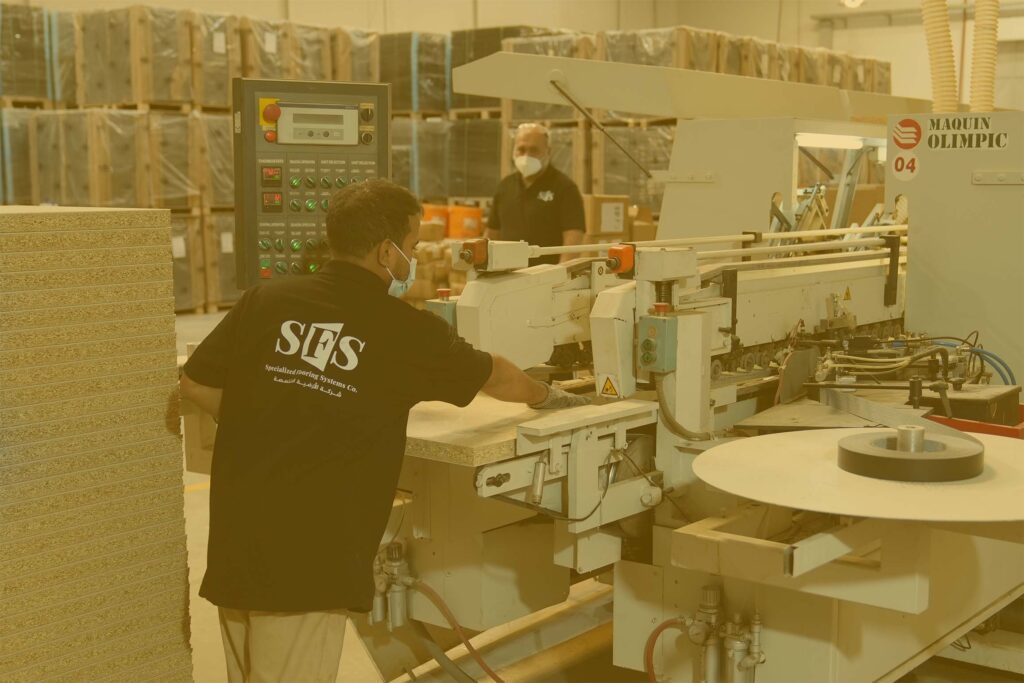
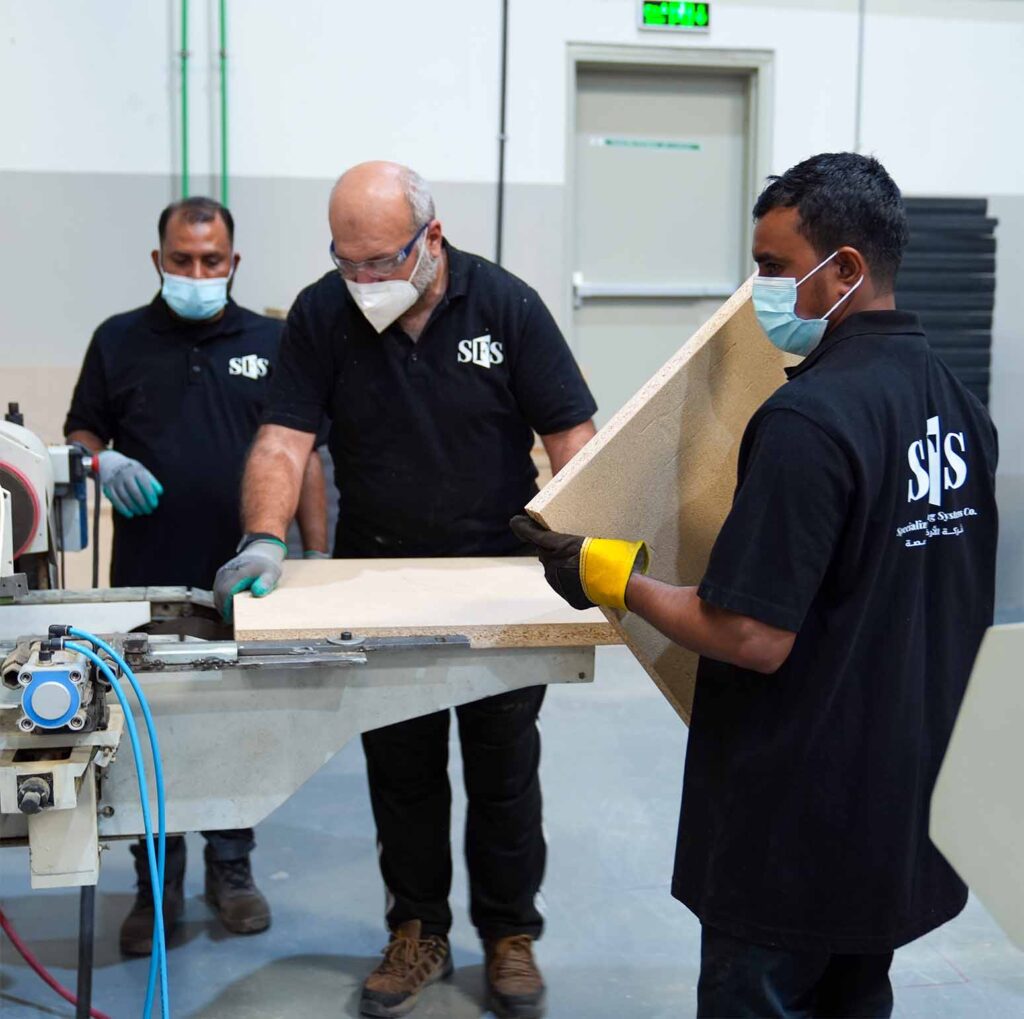
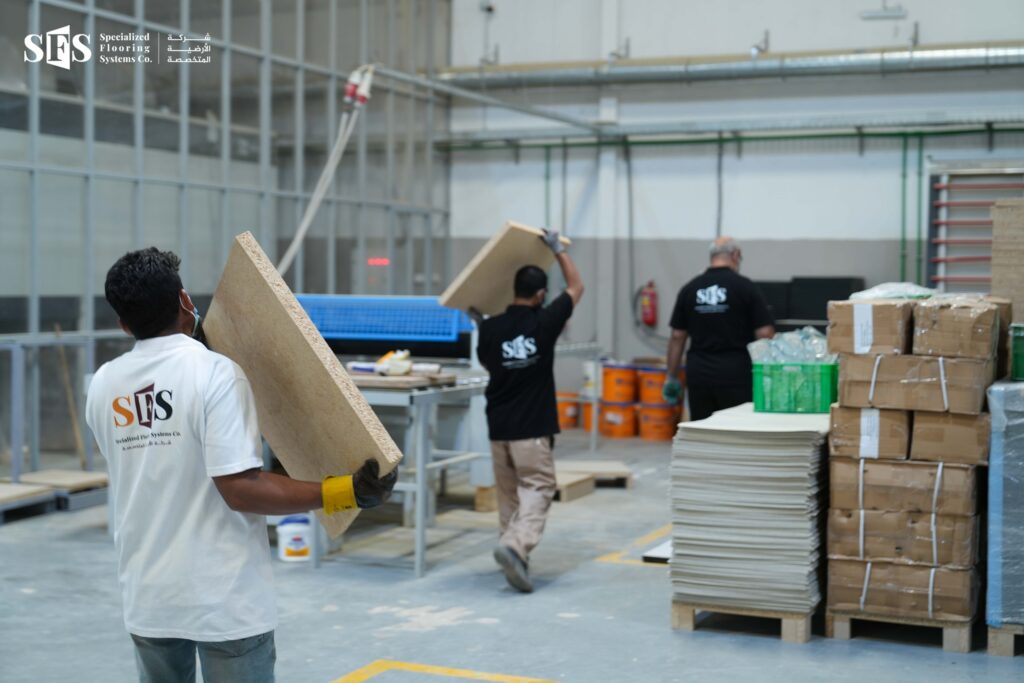
SFS operates advanced manufacturing facilities producing calcium sulphate panels, steel cementitious panels, and encapsulated panels. Local production ensures quality control, supply chain reliability, and fast delivery.
Saudi-Based Production
Being a Saudi manufacturer provides decisive advantages: no international shipping delays, no customs clearance issues, faster response times, and alignment with Vision 2030 local content goals.
Quality Control
Every panel is tested before leaving the factory. Load capacity, fire resistance, dimensional accuracy, and surface finish are verified against international standards.
Engineering Support
SFS engineers assist with load calculations, plenum design, panel selection, and specification development. They understand regional requirements and application-specific demands.
Fast Delivery
Local manufacturing eliminates months-long lead times. Standard panels are available within days. Custom solutions are delivered faster than imported alternatives.
GCC Project Capabilities
SFS has successfully delivered raised flooring solutions for data centers, government buildings, corporate offices, and telecom facilities across the Gulf region.
Professional Installation Support
SFS provides installation supervision and technical support to ensure systems perform as designed. Proper installation is verified before handover.
Technical Consultation
From design phase through post-installation, SFS offers ongoing technical consultation. Clients receive guidance on maintenance, reconfiguration, and future expansion.
Future Trends in Raised Flooring Systems
Smart Buildings
Raised floors will increasingly integrate with building automation systems. Embedded sensors monitor temperature, humidity, and occupancy. Data from underfloor sensors optimizes HVAC and lighting.
Energy Efficiency
UFAD systems will become more sophisticated, with variable air volume controls and zone-based cooling. Perforated panel placement will be dynamically adjustable.
Sustainable Construction
Demand for recycled and low-carbon materials will grow. Calcium sulphate panels (recycled gypsum) and cementitious panels with reduced carbon footprints will gain market share.
Modular Infrastructure
Prefabricated raised floor systems with integrated cable management and airflow components will reduce installation time and improve consistency.
AI-Ready Data Centers
Data center raised floors must accommodate higher densities, greater cooling demands, and more frequent reconfiguration as AI workloads scale.
Flexible Commercial Spaces
Post-pandemic office design emphasizes adaptability. Raised floors enable spaces to reconfigure rapidly as hybrid work patterns evolve.
Frequently Asked Questions (FAQ)
1. What is the best raised flooring system for data centers?
Steel cementitious panels with 15 kN or higher concentrated load rating, anti-static finish, and perforated options for cold aisle containment. Plenum depth should be 600-1200mm for adequate airflow.
2. How do I calculate raised floor load capacity?
Calculate the weight of heaviest equipment, divide by the number of panel corners supporting it (typically 4 per panel), add 25-50% safety margin. For data centers, minimum 12.5 kN concentrated load is standard; 15-20 kN recommended for future growth.
3. What is the difference between calcium sulphate and steel panels?
Calcium sulphate panels offer superior flatness and acoustic performance. Steel cementitious panels offer higher load capacity and better moisture resistance. Both provide excellent fire resistance.
4. How long do raised floor systems last?
With correct specification, professional installation, and proper maintenance, raised floor systems have a service life of 25 years or more.
5. Are raised floors suitable for commercial offices?
Yes. Calcium sulphate panels are ideal for offices requiring flatness, acoustics, and fire resistance. Encapsulated panels work for cost-sensitive projects with moderate loads.
6. What standards should raised floor systems meet?
EN 12825 (European raised access floor standard), ISO 14644 for cleanroom applications, ANSI/TIA-942 for data centers, and local building code requirements.
7. What affects raised floor pricing?
Panel core material (calcium sulphate and steel cost more than particleboard), load capacity (higher ratings cost more), surface finish (premium finishes add cost), and quantity (larger projects achieve economy of scale).
8. Why is professional installation important?
Improper installation causes rocking panels, uneven surfaces, compromised load capacity, reduced airflow efficiency, and premature failure. Professional installation ensures performance as specified.
9. Can raised floors be reconfigured after installation?
Yes. Modular design allows panels to be lifted, moved, and reinstalled. Cables can be rerouted. Perforated panels can be repositioned. This is a primary advantage of raised flooring systems.
10. Do raised floors require maintenance?
Periodic visual inspection, cleaning of surface finishes, and checking pedestal tightness are recommended. Anti-static finishes may require specific cleaning products.
Conclusion
Choosing the right raised floor system is a decision that will impact your building’s operational efficiency, safety, and adaptability for decades. The stakes are high. The margin for error is small. Understanding load capacity, design principles, specification evaluation, and application requirements is essential for making informed choices that balance performance, cost, and long-term value.
Avoid the common mistakes: selecting based on price alone, ignoring future expansion, poor airflow planning, weak installation, and non-compliant systems. Instead, engage engineering expertise, specify for growth, verify certifications, and insist on professional installation.
For projects across Saudi Arabia and the GCC, SFS provides the manufacturing capability, engineering support, and project experience to deliver raised flooring systems that perform reliably over the long term. Local production ensures fast delivery. Quality control guarantees performance. Technical consultation supports every phase of your project.
Do not leave your foundation to chance. Contact SFS today for expert guidance on choosing the right raised floor system for your specific application.